One of my favourite London galleries, Pace are gearing up to present works from New York based artist Joel Shapiro this May. And as ever I am just a little bit excited.
Founded in Boston in 1960, Pace Gallery has become a global phenomenon with galleries based in Beijing, Hong Kong, Paris and London to name just a few. World renowned for its cutting edge, contemporary and modern art exhibitions, this May they are bringing the sculptures of Joel Shapiro.
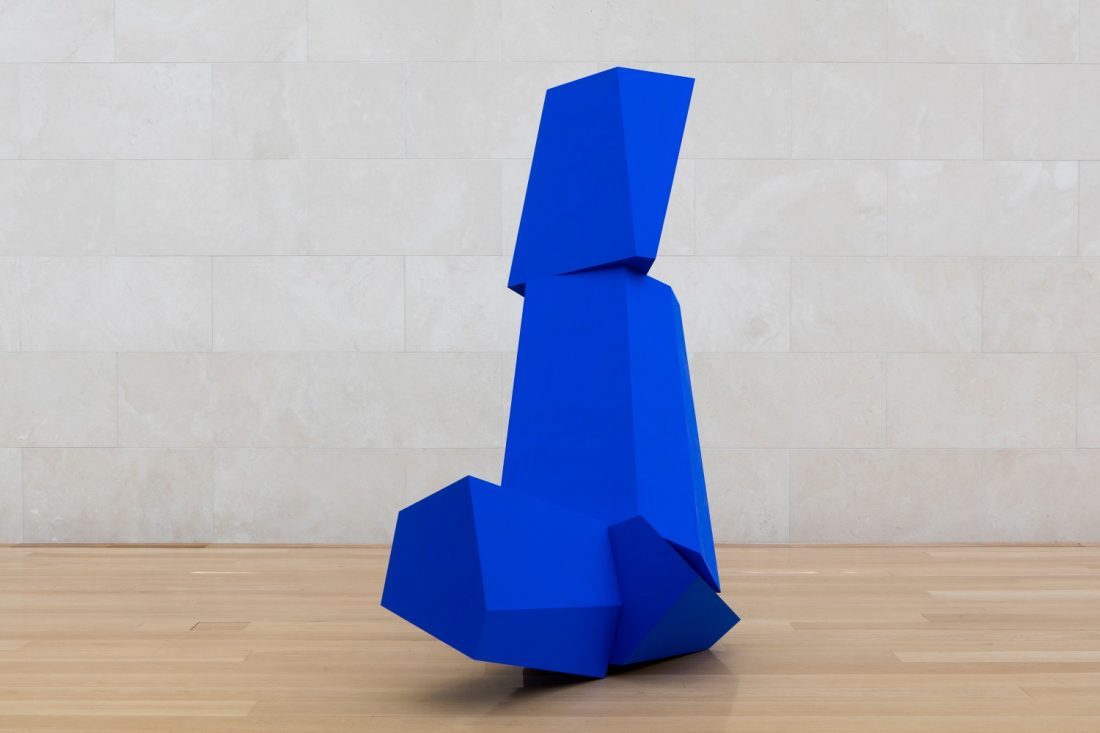
The latest exhibition is an investigation of anthropomorphic and architectonic form that challenges the viewer’s sense of balance and scale. With sculptures hanging from the ceiling, others displayed on the floor, many of these works seem weightless in space, hanging timelessly like stages of formation. Faint diagrams of the human form.
This represents a change in direction from Shapiro’s more classically known works. Since 2002, the artist, born in 1941, has begun disassembling structures into a series of wood and wire works which were then hung from the ceilings and walls of his studio. Exploring the Platonic forms of structures, he began so see through the overtly visual aspects of our experience, and into the more transcendental nature of objects.
Working with vivid colours you’d think there’s a playful friendliness to the work. However this belies the impressive size and stature of each piece, which intimidate as they hang there or sit on the ground in slumber. You get the sense of being in the room with something otherworldly, something creeping through the cracks in our reality.
Speaking about his latest collection, the artist has mused,
“The idea of thinking in colour always interested me. If you are a sculptor and you use colour, the colour has to mean something, do something to change your perception of the piece. Cobalt violet obfuscates form and blue withdraws. Cadmium red and black both add density.”
Having created a dreamscape of sorts, this is an investigation into the dynamics of form and colour, playing with your psychological and perceptual cortexes.